Thermal Simulation
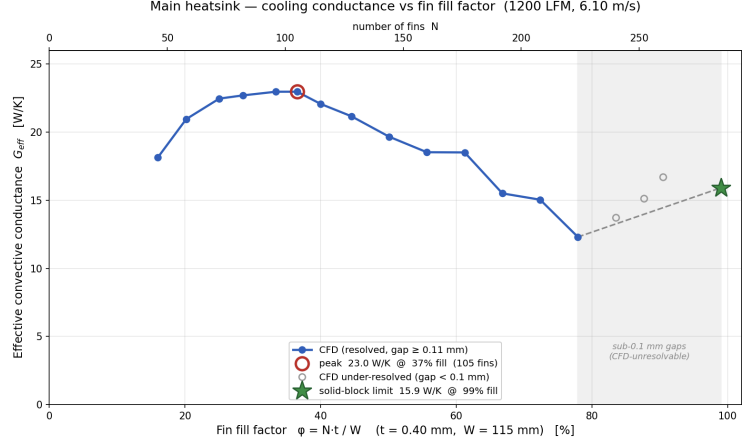
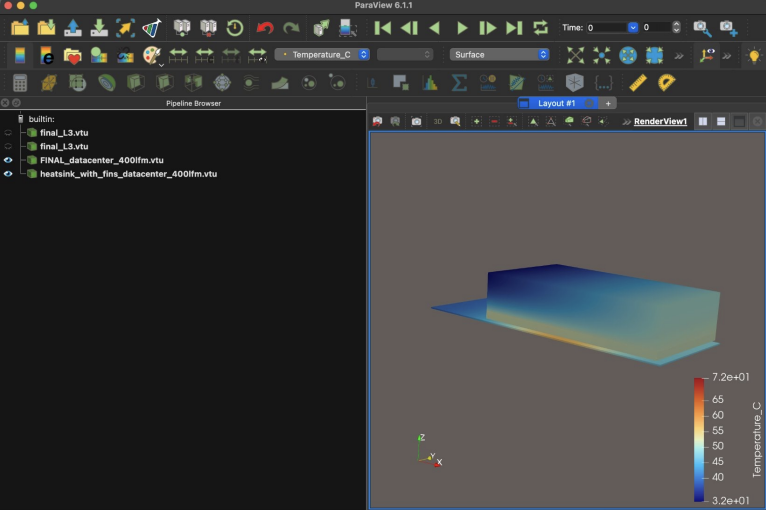
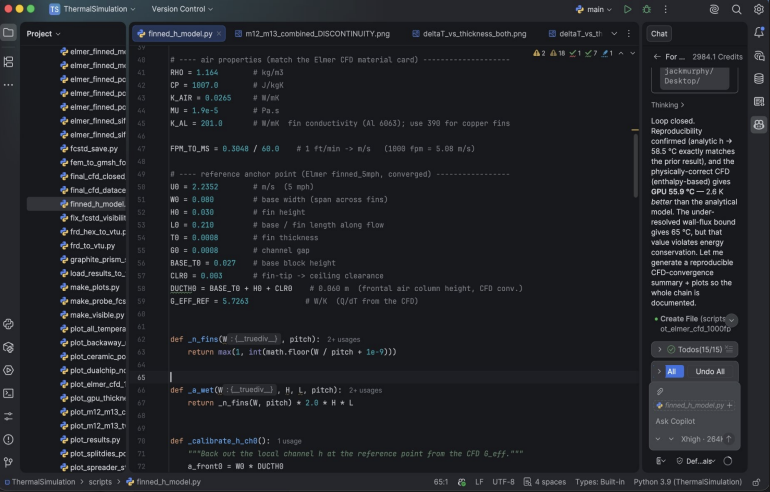
Currently developing a thermal model to assess temperature and power limitations within a GPU card. Through this project, I have gained exposure to advanced thermal management techniques, including anisotropic materials, carbon nanotubes, vapor chambers, heat pipes, and both compliant and non-compliant Thermal Interface Materials (TIMs).
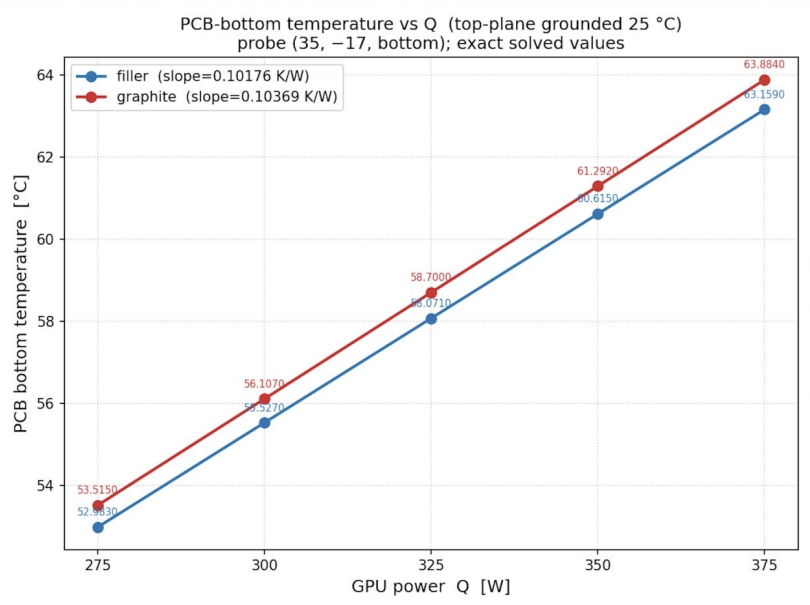
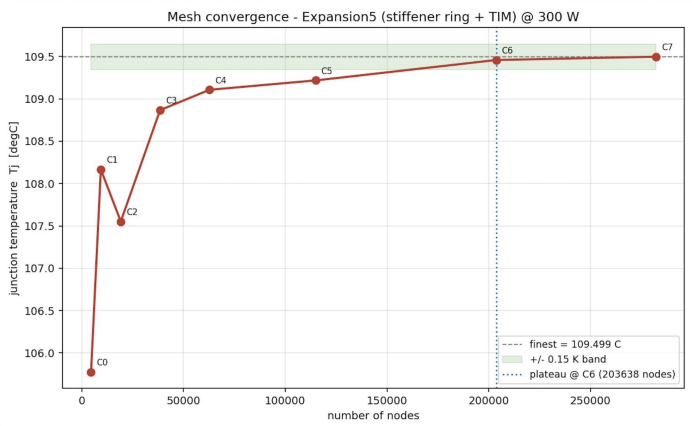
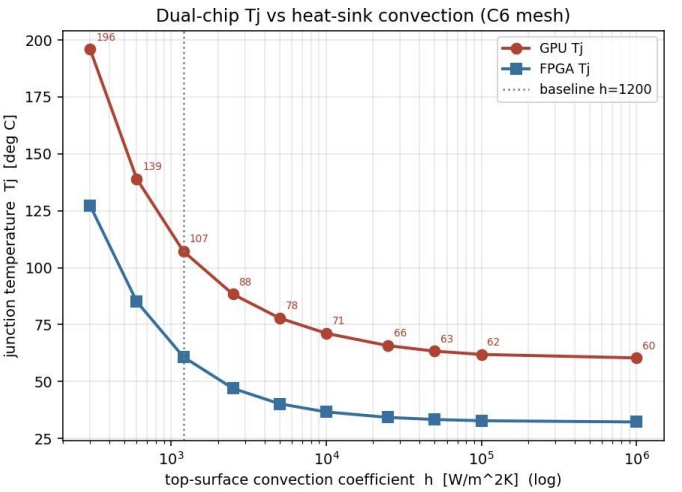
Numerous parameter checks and sensitivity tests are run after each iteration to the model. This ensures the results are accurate and the model aligns with core engineering principles. A few of the verification checks include power generation sweeps, stress-testing with abnormally large convection coefficients, and mesh convergence studies.
Modeling the actual card has also presented unique engineering challenges. One challenge included simplifying the complex ball-grid-array (BGA) on the bottom of a GPU. In short, the BGA package is a layer of thousands of solder balls that help connect the GPU chip to the printed circuit board (PCB). Simulating every single individual solder ball would be computationally overwhelming. To overcome this, the BGA package was simplified to a single plate with an equivalent conductance and thickness to make the computational load much smaller.